

Dental Implant Failure & Salvage – South Portland, ME
Restore Your Healthy Smile with Dental Implant Salvage

Over the past few decades, dental implants have earned the reputation of being very successful, even long-term. However, on the rare occasion that your restoration begins to fail, we may be able to help get your smile back on track.
Why Choose Mind Your Mouth for Dental Implant Salvage Treatment
- Advanced Technology Used for Enhanced Treatment Success
- CareCredit Financing Available
- Caring & Compassionate Dentists
Why Do Dental Implants Fail?
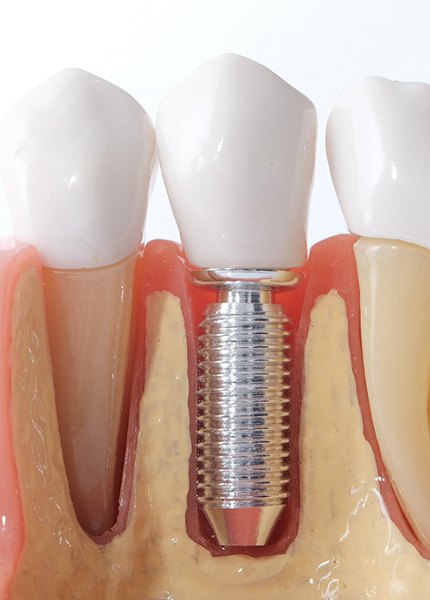
There are many reasons why dental implants can fail. The most common cause is a condition known as peri-implantitis. With peri-implantitis, bacteria and infection destroy the connective tissue around the dental implant, weaking the supporting jawbone structure. It is typically caused by poor oral hygiene and periodontal disease.
The second most common cause of dental implant failure is failed osseointegration, where the dental implant does not properly fuse with the jawbone. This may be due to poor jawbone density or other factors.
Other reasons a dental implant might fail include injury and certain medical conditions.
Symptoms of a Failed Dental Implant

Dental implant failure can occur at any time, even decades after your initial placement. Early dental implant failure typically occurs during the healing period after placement, while later failure can happen much later. Here are a few common warning signs that may indicate your prosthetic is failing:
- The implant is loose or wobbly.
- The implant site has worsening pain weeks or more after the initial surgery.
- Gum infection or inflammation, which may include tender, swollen, or bleeding gums that may or may not leak pus or discharge.
- Receding gums around the dental implant site that exposes the post.
- Painful chewing or biting with the implant.
- Nerve damage or numbness around the dental implant, tongue, lips, or gums.
- A bad taste in the mouth or foul-smelling breath.
If you notice any of these symptoms, please contact us as soon as possible.
How Dental Implant Salvage Works
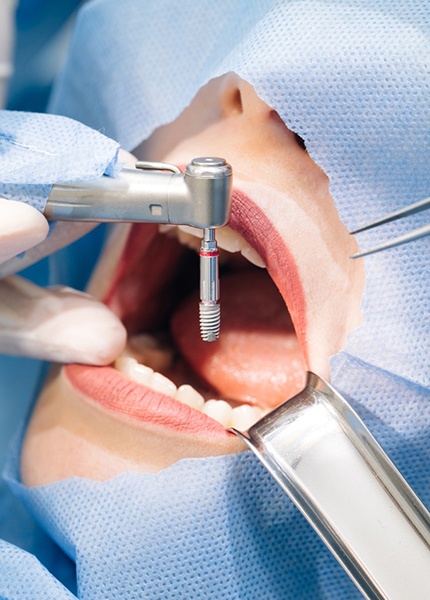
If you notice any of the above symptoms, or even if something just “feels off,” it’s better to see your dentist right away than risk the problem getting worse. The earlier we can identify an issue with your dental implant, the easier and less expensive it will be to correct it.
Dental implant salvage is an incredible treatment that can restore your dental implants and your beautiful smile. First, your dentist will remove the unstable prosthetic. Next, she will perform appropriate restorative treatment(s) that may include bone grafting, a sinus lift, gum disease treatment, or a combination of several. After your mouth has healed from these treatments, your dental implant will be re-attached, giving your smile another opportunity to thrive.
Recovering from a reimplantation procedure is very similar to the initial placement including the healing time and aftercare instructions.
Once your dental implant has reintegrated with your jawbone, your dentist will reattach the abutment and crown, and you can once again enjoy all the benefits of your restored smile.