

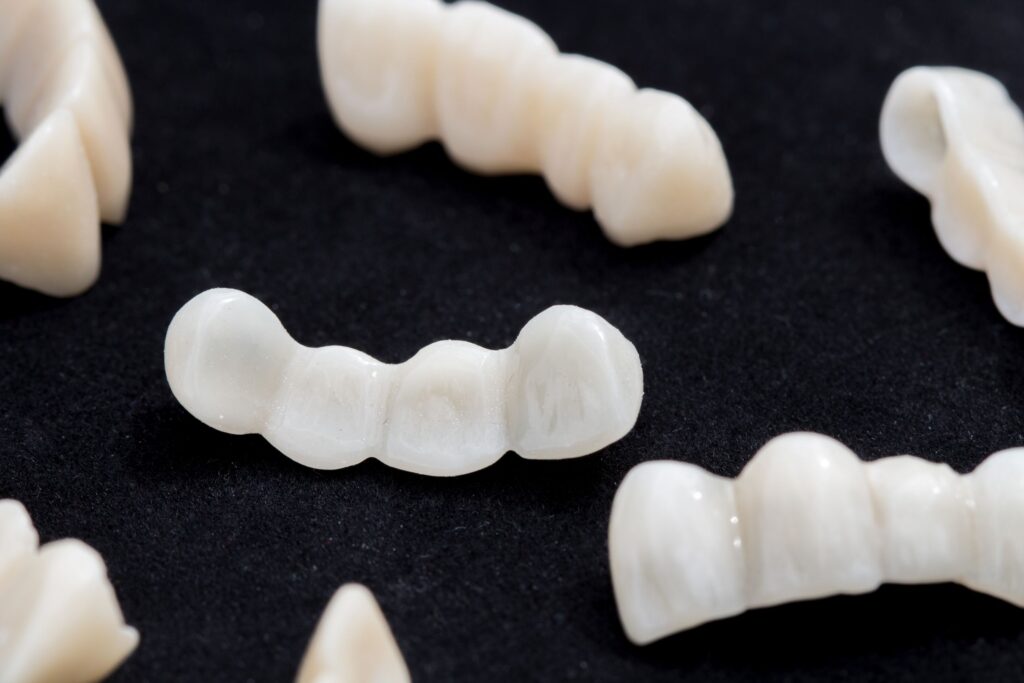
The quality of your smile is one of the first things others notice when they meet you. Unfortunately, if your teeth are riddled with chips, cracks, stubborn stains, mild misalignments, or other flaws, then you might feel self-conscious or worry that you’ll be judged for your looks.
Thankfully, many dentists offer porcelain veneers to mask aesthetic imperfections and enhance your appearance. But you might be surprised to learn that you’ll likely need to wear a temporary set before your permanent ones are cemented in place. Continue reading to learn more about these restorations and when they might be needed!
How Do Veneers Work?
Before proceeding with veneers, you must consult your dentist to determine whether you’re a good candidate. They’ll examine your teeth and gums and treat any issues, like disease or decay, that could negatively affect the outcome. Then, once they determine your mouth is healthy enough to proceed, they will prepare your teeth by removing a small amount of enamel so the restorations fit correctly without looking bulky or contributing to a misalignment.
This protective outer layer doesn’t regenerate, making this an irreversible change that slightly weakens the structure of your teeth. You’ll need to have these shells or another restoration in place to help protect them going forward. Then, your provider makes impressions of your teeth and sends them to a special dental laboratory, where they are used to create your one-of-a-kind prosthetics.
Will I Need Temporary Veneers?
It can take the dental lab a couple of weeks to finalize your restorations and deliver them to your dentist’s office for a final fitting and to cement them in place. Until then, your treated teeth are somewhat more vulnerable to damage, decay, and other issues, so many providers recommend placing a temporary set to help safeguard your smile.
In some cases, temporary veneers are also recommended to give a patient a “trial run” with this treatment before making permanent changes to their smiles.
How Are Temporary Veneers Different?
Are you wondering how your temporary veneers are different from their more permanent counterparts? These restorations are typically not intended to be worn for more than a week or two, so they’re not built for durability. They can become chipped, cracked, or stained, so it’s best to avoid hard, sticky, or crunchy foods, especially those that are darkly colored.
Not only that, but these temporary covers are also usually pre-made and therefore aren’t customized to fit your teeth the same way. So, if they feel awkward or bulky, don’t lose hope! Your permanent restorations are tailor-made for your mouth, so you can anticipate more lifelike results that boost your confidence.
If you’re unsure whether you’ll need temporary veneers or what to expect from them, you can learn more by scheduling an appointment with your dentist!
About the Practice
Patients at Mind Your Mouth benefit from a team of providers who are passionate about helping them improve their lives by enhancing their dental health. Dr. Paret and Dr. Trone, both accomplished general dentists, collaborate with Dr. Thaleia, a prosthodontist, to offer a complete menu of services, including veneers, conveniently under one roof. They caring approach is paired with advanced technology to deliver more comfortable and accurate outcomes intended to last. You can request an appointment on the website or by calling (207) 200-4106.